An itchy rash on your baby’s skin might look alarming. Atopic dermatitis, also called eczema, is common in babies.
If your baby has eczema, they might feel itchy, sleepy (if their rash keeps them from getting good sleep), and are more likely to get a skin infection. The good news is board-certified dermatologists say you can manage baby eczema and help your infant (0-12 months old) feel better through self-care at home and treatment.
Does my baby have eczema?
If your baby has eczema, you might notice one or more of these signs and symptoms:
A rash that looks pink, red, purple, or brown
Itchy skin and scratch marks (you might also notice your baby rubbing against objects to relieve the itch)
Dry skin
Scaly skin
Small bumps
Blisters that leak fluid
Swelling
Baby eczema usually shows up on an infant’s face (like around their mouth or cheeks), neck folds, scalp, trunk, and the outsides of their arms or legs. The rash might appear in only one area or cover a lot of your baby’s body, but it doesn’t typically appear in the diaper area.
In darker skin, baby eczema rashes look dark brown-to-purple in color.
Baby eczema in lighter skin looks pink or red.
Scratching or rubbing to relieve itch can cause small bumps in baby eczema.
When should I see a doctor about my baby’s eczema?
If good skin care does not help a rash that looks like eczema go away after a few days, see your dermatologist or pediatrician. Not all rashes are eczema, but if your baby seems uncomfortable, it’s best to find out the cause. A lot of other conditions can look like baby eczema, including cradle cap, psoriasis, yeast infections, and other health issues.
Getting your infant’s eczema diagnosed and treated early lets them get the care they need to feel better. Board-certified dermatologists know how to help you minimize the impact baby eczema has on your child and family through safe and effective treatments.
Can my pediatrician treat my baby’s eczema?
Your pediatrician might be the first one to notice your baby’s eczema. According to board-certified dermatologist Lawrence Eichenfield, MD, FAAD, “pediatricians can also help you decide if it’s appropriate to see a dermatologist.”
He adds that for baby eczema that’s severe or lasts a long time, “a board-certified dermatologist is a tremendous resource to help with education and management.”
How can board-certified dermatologists help parents struggling with baby eczema?
Eczema can be difficult to fully understand. There are many approaches to standard, good-quality skin care and treatment of infant atopic dermatitis. Partnering with a dermatologist or pediatric dermatologist can help navigate the challenges!
─ Lawrence Eichenfield, MD, FAAD
It is very common for infants with eczema to have challenges sleeping along with discomfort and itch. Getting medical attention when your daily skin care for your baby doesn’t reduce symptoms helps ensure they receive an effective care plan as soon as possible.
─ Dawn M.R. Davis, MD, FAAD
Will my baby’s eczema ever go away?
Many children outgrow eczema. However, there is no way to know whether eczema will go away or become a lifelong disease.
“The best approach is to control the signs and symptoms of eczema early to give your baby’s eczema a bigger chance to improve over time, as more severe eczema lasts longer,” says Dr. Eichenfield.
Is baby eczema contagious?
Eczema is not contagious for babies or anyone else. However, other rashes children often get that might look like eczema, like hand-foot-and-mouth disease, can be very contagious. To see a picture of hand-foot-and-mouth disease, go to Hand-foot-and-mouth disease: Signs and symptoms.
If a condition besides eczema is causing your baby’s rash, a diagnosis from your dermatologist or pediatrician is the best way to get your baby the care they need.
Can skin care treat baby eczema?
Skin care habits, like regularly applying moisturizer and bathing in certain ways, may be the only treatment your baby needs to treat their eczema.
To treat baby eczema, choose skin care products that:
Say “hypoallergenic” and “fragrance-free” on the label. (Do not choose “unscented” products, as these can still contain fragrance ingredients.)
Do not contain many plant-based ingredients, like essential oils, as these can irritate sensitive skin.
Are made for infants with eczema.
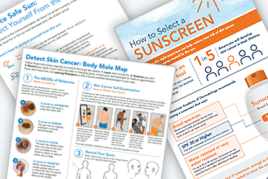
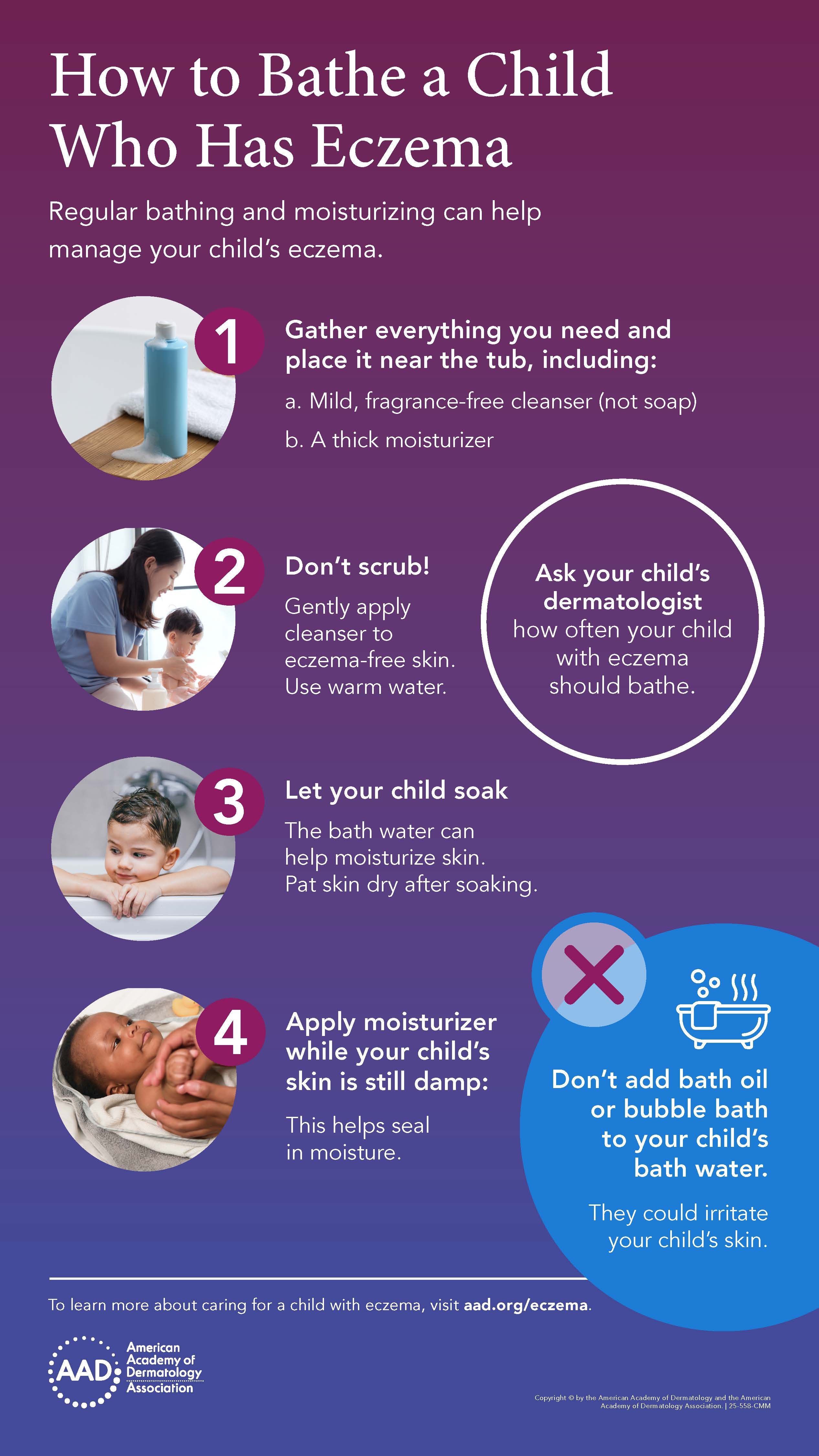
The right baby eczema skin care depends on your baby’s unique needs. However, dermatologists say following some or all the steps in the How to Bathe a Child Who Has Eczema infographic can help your baby get relief.
Follow these dermatologist tips to help manage your child's eczema with regular bathing and moisturizing. Click the image above to download the PDF.
How should I treat my baby’s eczema?
If skin care alone does not improve your baby’s eczema, your dermatologist may prescribe eczema medication. When your dermatologist prescribes an eczema medication, they will give you instructions for how often to apply or give it to your baby. Following your dermatologist’s instructions can help prevent side effects and help your baby feel better, faster.
Dermatologists say these treatments can help your infant get eczema relief:
Eczema treatments you apply to your baby’s skin
Corticosteroids. Topical corticosteroids are usually the first treatment for baby eczema. When used appropriately, these are safe and effective medications.
Corticosteroids reduce inflammation and itch from eczema. It’s important to follow your dermatologist's instructions as corticosteroids can damage your baby’s skin if used incorrectly or for too long, and babies’ skin is especially sensitive to them. Signs you might need to stop applying a corticosteroid to your baby’s skin include swelling, color changes like redness or light or dark spots, and rashes.
You can buy mild corticosteroids, like hydrocortisone cream, at the drugstore without a prescription. Your dermatologist may prescribe a stronger corticosteroid if needed. To find out more, go to Eczema treatment: Corticosteroids applied to the skin.
Crisaborole cream or ointment. If your baby has mild to moderate eczema, this medication can help reduce inflammation and itch. Crisaborole might burn a little when you apply it to your baby’s skin, but that feeling shouldn’t last. If your baby seems uncomfortable for a long time after applying crisaborole, talk to your dermatologist. To learn more, go to: Eczema treatment: Crisaborole ointment.
Wet wraps. You can help your baby’s skin absorb medication, stay hydrated, reduce eczema flares, and prevent scratching by applying moisturizer or medication, if necessary, to your baby’s skin and wrapping the area in wet bandages (or damp, tight-fitting pajamas). Then, add a layer of dry bandages (or dry pajamas) over the wet ones.
Bleach baths. It might sound scary, but adding a small amount of bleach to your child's bathwater can help to soothe your baby’s eczema. A small amount of bleach in bathwater can reduce bacteria and inflammation that can make your baby’s eczema worse. If your dermatologist recommends bleach baths to treat infant eczema, the video at Atopic dermatitis: Bleach bath therapy shows you how to prepare one.
Eczema treatments that work throughout your baby’s body
If skin care and treatments you apply to your baby’s skin do not help their eczema, your dermatologist may prescribe one or more of these treatments:
Biologic. Your dermatologist may prescribe dupilumab if your baby is 6 months or older and treatments you apply to your baby’s skin haven’t helped their eczema. This biologic can calm inflammation throughout your baby’s body to improve eczema symptoms. Dupilumab is given as a shot just under the skin. You will be taught how to give this shot, so you can treat your baby with dupilumab at home.
What triggers eczema flare-ups in babies?
Along with treating your baby’s eczema, finding and avoiding eczema triggers helps you stay in control and make your baby more comfortable.
If your baby has a higher risk of developing eczema, dermatologists found that applying moisturizer to their skin might help prevent eczema.
There’s not enough evidence to say if introducing your baby to foods early can prevent or lessen your baby’s eczema. Dermatologists say that feeding your baby breast milk or probiotic or vitamin D supplements does not affect their chances of developing eczema. Prebiotic and synbiotic (combining probiotic and prebiotic) supplements, goat milk, fatty acid supplements, and special formulas are also unlikely to help prevent infant eczema.
Is baby eczema caused by food?
No, baby eczema is not caused by food. While research has been conducted to determine if there is a relationship between food and eczema, Dr. Eichenfield says the way eczema and food allergies, hay fever, and asthma relate is complicated: “A common myth is that eczema is generally caused by food allergy. Unfortunately, while children with eczema have more chances of developing a food allergy, it is rare that identifying a ‘secret food trigger’ resolves eczema.”
Your dermatologist knows how to treat your baby’s eczema to help prevent it from worsening as they grow up. To locate a dermatologist who specializes in eczema near you, visit Find a Dermatologist.
Image
Images 1-3: Images used with permission of the American Academy of Dermatology Clinical Image Collection.
Image 4: Courtesy of Lawrence Eichenfield, MD, FAAD
Image 5: Courtesy of Dawn M.R. Davis, MD, FAAD
References Davis, D, Alikhan A, Bercovitch, L, et al. "Guidelines of care for the management of atopic dermatitis in pediatric patients." J Am Acad Dermatol. 2026;95(1):121.e1-121.e26.
Sidbury R, Alikhan A, Bercovitch L, et al. "Guidelines of care for the primary prevention of atopic dermatitis and awareness of comorbid conditions in pediatric atopic dermatitis." J Am Acad Dermatol. 2026;95(1):124.e1-124.e19.
Written by Brooke Schleehauf
Reviewed by Raj Chovatiya, MD, PhD, MSCI, FAAD
Dawn M.R. Davis, MD, FAAD
Lawrence Eichenfield, MD, FAAD
Esteban Fernandez Faith, MD, FAAD
Elisa Gallo, MD, FAAD