






Hidradenitis suppurativa: Tips dermatologists give their patients
Patients often ask their dermatologist, “Should I squeeze hidradenitis suppurativa (HS)?"
The answer is “no.” Squeezing or popping the nodules, abscesses, or tunnels can injure or irritate your skin. Anything that injures or irritates your skin can worsen hidradenitis suppurativa.

While dermatologists do not recommend squeezing hidradenitis suppurativa, they do recommend other self-care tips that can help you get the best results from treatment. Here’s what dermatologists recommend you do at home:
Wash your skin with an antimicrobial wash. This helps reduce bacteria on your skin. When there's less bacteria, you may have fewer flare-ups.
One product that can decrease the bacteria on your skin is an acne wash that contains benzoyl peroxide. Another product is a soap or shampoo that contains zinc pyrithione.
If you scrub your skin, stop. Patients often think that the painful lumps and leaking sores mean that they have dirty skin. You don’t have dirty skin. You have a skin condition. Scrubbing causes inflammation, which can worsen hidradenitis suppurativa.
Take care when shaving or waxing skin with hidradenitis suppurativa. In general, dermatologists recommend that patients with hidradenitis suppurativa never wax. Waxing can irritate the skin, which may cause more painful lumps.
If you shave, take extra precautions to avoid nicks and cuts. Here are the precautions that dermatologists recommend:
Before you shave, wash the area with an antibacterial soap.
Soften and protect your skin by applying a gel-to-foam shaving gel.
Shave carefully.
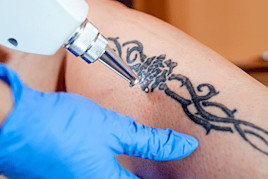
Consider laser hair removal as a way to remove hair where you have hidradenitis suppurativa. Studies have shown that getting laser hair removal can reduce flare-ups. Laser treatment can be effective because it can reduce the number of hair follicles you have, decrease bacteria on your skin, and make sebaceous glands less active.
While laser hair removal may sound appealing, it’s important to know that it can be costly. Insurance doesn’t always cover the cost, so you may need to pay for this treatment.
If you and your dermatologist decide that laser hair removal is right for you, you’d see a dermatologist who performs this procedure. Dermatologists perform laser hair removal during an office visit. The dermatologist who performs the laser hair removal can tell you how many sessions you’ll need. Sessions are generally spaced about 6 weeks apart. It can take time to get the desired results.
Treat a painful lump at home with heat. To use heat on hidradenitis suppurativa, dermatologists recommend making the following:
- Warm water compress: To make this compress, place a clean washcloth under warm running water. Wring out the excess water and place the washcloth on the painful lump or other lesion. Leave the washcloth on for 10 minutes.
You can repeat this several times during the day to reduce pain. This warm compress can also help drain painful hidradenitis suppurativa.
- Warm water compress: To make this compress, place a clean washcloth under warm running water. Wring out the excess water and place the washcloth on the painful lump or other lesion. Leave the washcloth on for 10 minutes.
Avoid sweating and overheating. While applying heat to a painful lump can bring relief, sweating and overheating can cause a flare-up. To reduce sweating, dermatologists recommend that you:
- Limit your activity when you’re in a warm or hot place, including the outdoors.
- Stay in a cool space. If that’s not possible, cool down in an air-conditioned place whenever possible.
- In warm weather, try to be outdoors in the morning or late afternoon when it’s cooler.
If you live or work in an area that makes it difficult to avoid sweating or overheating, ask your dermatologist to give you individualized advice.Use a mild and effective antiperspirant or deodorant. Some products are too harsh for skin with hidradenitis suppurativa. Look for an antiperspirant or deodorant that does NOT contain alcohol, baking soda, parabens, dyes, or fragrance. These ingredients can irritate the skin, leading to a flare-up.
If you have a wound-care treatment plan, follow it. This plan can help heal wounds and prevent infection. Wounds can be difficult to treat. Tell your dermatologist if any wound fails to heal, opens up after healing, or becomes more painful.
If hidradenitis suppurativa flares when you wear tight or form-fitting clothes, wear looser clothing. When clothing rubs on skin with a painful lump or fluid-filled abscess, it can irritate your skin, causing hidradenitis suppurativa to worsen. If you need to wear tight-fitting athletic clothing or leggings, ask your dermatologist for advice on how to reduce flare-ups.
Tell your dermatologist if you have joint pain. People living with this skin condition have a higher risk of developing diseases that affect the joints like arthritis.
If you are overweight, lose weight. Studies show that people with hidradenitis suppurativa have a higher risk of developing heart disease and diabetes. Losing weight and eating a healthy, well-balanced diet can reduce your risk of developing these diseases.
If you’re having trouble losing weight, ask your dermatologist or primary care doctor about programs that can help you.
If you use tobacco, stop. Quitting can help you live a longer, healthier life. It can also reduce hidradenitis suppurativa flare-ups, prevent this condition from worsening, and improve how treatment works.
Occasionally, patients who stop smoking cigarettes get rid of hidradenitis suppurativa.
For many people, quitting smoking is difficult. The cravings for nicotine can be intense. To help people quit, the American Lung Association (ALA) has been offering a quit smoking program for more than 35 years. Today, the ALA says that it’s ranked as one of the most effective programs for helping people quit smoking for good.
Learn more at Freedom from Smoking®.
Your dermatologist can give you specific tips
While these self-care tips can help, hidradenitis suppurativa may affect your skin in different ways. By working one-on-one with a board-certified dermatologist, you can find what works best for you.
Image
Getty Images
References
Carrington AE, Vatanchi M, et al. “Laser hair reduction for hidradenitis suppurativa warrants insurance coverage.” Dermatol Online J. 2020 Apr 15;26(4): 13030.
Naik HB, Yeung H, et al. “Joint American Academy of Dermatology-Hidradenitis Suppurativa Foundation guidelines of care for the management of hidradenitis suppurativa.” J Am Acad Dermatol. Published online Oct 20, 2026.
Narla S, Price KN, et al. “Proceeding report of the Fourth Symposium on Hidradenitis Suppurativa Advances 2019.” J Am Acad Dermatol. 2021;Jan;84(1):120-9.
Written by:
Paula Ludmann, MS
Reviewed by:
Jennifer Adams, MD, DTM&H, FAAD
Steven Daveluy, MD, FAAD
Kelley Redbord, MD, FAAD
Abigail Waldman, MD, FAAD
Last updated: 10/20/26