





Relief for skin reactions from targeted cancer therapy
Dermatologist reviewed: Natalie Matthews, MD, MPhil, FAAD; Rajiv I. Nijhawan, MD, FACMS, FAAD; Darrell S. Rigel, MD, FAAD. Reviewer bios.
Caught early, most skin reactions can be managed, allowing you to continue your targeted therapy cancer treatment uninterrupted.
If you are receiving targeted therapy to treat cancer, dermatologists recommend that you pay close attention to your skin, hair, nails.
Skin reactions are a common side effect of targeted therapy. Some of these medications can affect your hair or nails. Spotting a reaction early and getting treatment can prevent the reaction from worsening. It can allow you to continue receiving targeted therapy uninterrupted.
Dermatologists also recommend that you start a skin, hair, and nail care routine while receiving targeted therapy. Created by dermatologists, this care routine can reduce — and sometimes prevent — reactions.
In this article:
What is targeted therapy, exactly?
When cancer spreads and becomes life threatening, medication known as targeted therapy may be an option for some patients. Targeted therapy can stop cancer from growing and spreading. This can lead to remission (a period of time when symptoms lessen or stop) that last for months — and sometimes years.
Another benefit of targeted therapy is that the reactions it causes tend to be less severe than those caused by chemotherapy. Oncologists (cancer doctors) prescribe targeted therapy to treat many types of cancer, including breast, colon, and skin cancer. If you’re unsure whether you’re receiving targeted therapy, ask your oncologist, dermatologist, or someone on your cancer care team.
Who develops a skin reaction from targeted therapy?
Many, but not all, patients develop a skin reaction while receiving targeted therapy. Skin reactions are common. Keep in mind that different targeted therapy medications cause different reactions.
For example, some targeted therapies cause a rash that looks like an acne breakout. Others can cause changes to a patient’s hair or nails.
Caught early, most reactions can be managed
If you develop a reaction that affects your skin, hair, or nails, it’s important to report it to your cancer care team early.
How to find a reaction early: If you notice a change to your skin, hair, or nails, report it to your cancer care team right away. Even if the reaction seems mild, like extremely dry skin, it’s essential to report it.
7 common reactions due to targeted therapy
While treating a reaction at home can bring relief, it’s essential to contact your oncologist or dermatologist and let them know about the reaction.
Here are 7 common reactions to watch for, along with dermatologists’ tips for getting relief. You’ll also find out when to contact your dermatologist or oncologist.
Dry, itchy skin
This is a common side effect of targeted therapy. If you had dry skin before starting targeted therapy, the dryness can worsen.
Skin can also become extremely dry and rough during treatment. The rough, dry skin can break open and bleed. Deep, painful cracks can develop, especially on the hands. This dry skin tends to itch, sometimes intensely.
For immediate relief: Dermatologists recommend that you:
- Apply moisturizer throughout the day, taking care to apply it gently to your dry skin. Petroleum jelly is what dermatologists frequently recommend. You can also use a fragrance-free balm or cream that contains 3 to 10% urea. Another effective moisturizer is a thick, fragrance-free cream that contains shea butter, niacinamide, or ceramides.
- Before bed, gently apply a thick coat of petroleum jelly to all dry skin. After applying petroleum jelly to your hands and feet, cover your hands with cotton gloves and your feet with socks.
- Take 5-to-10-minute, warm (not hot) showers and baths. Hot water or too much time spent in water can dry your skin. When you get out of the tub or shower, apply petroleum jelly or a fragrance-free moisturizing cream.
- Wash with a gentle, fragrance-free cleanser formulated for sensitive skin. Many soaps and cleansers can irritate your skin while receiving targeted therapy.
- Wear rubber gloves when doing household chores. This is especially important when using dishwashing soap and other household cleaners.
Early and effective treatment is essential. Your doctor may recommend treatment, which may include:When to contact your dermatologist or oncologist:
Immediately.
- A special emollient (skin softener) to relieve symptoms
- A gentle skin care routine
- Medication to calm your skin and help it heal
If the itch continues, let your care team know. Prescription medication, transcutaneous electrical nerve stimulation (TENS), or acupuncture can bring relief.
Rash
Targeted therapy can cause a variety of rashes. Early treatment can help relieve your discomfort and prevent a rash from becoming severe.
If a rash becomes severe, it may be necessary to change your targeted therapy treatment. That could mean taking a lower dose or stopping targeted therapy temporarily. While rare, a patient may have to quit targeted therapy.
Rashes can appear on the skin in different ways. Common rashes that can develop during targeted therapy look like:
- Acne-like breakouts
- Flat spots and raised bumps
- Raised, scaly patches
- Dry, swollen, and itchy skin
- Raw, irritated skin only on your hands and feet
- Yellowish, thick, raised, and rough patches only on your hands and feet
For immediate relief:
- Moisturize with a gentle, fragrance-free cream or ointment. Dermatologists recommend using petroleum jelly or a fragrance-free cream or ointment that contains ingredients, such as shea butter, niacinamide, or ceramides.
- Follow the skin care routine for patients receiving targeted therapy. This includes gentle skin care and protecting your skin from the sun.
When to contact your dermatologist or oncologist:
Immediately.Depending on your symptoms, your doctor may prescribe treatment to calm your skin.
Sun-sensitive skin
When receiving targeted therapy, it’s essential that you protect your skin from the sun. Some targeted therapies can make the skin so sensitive that without sun protection, sunburn and blisters may develop within minutes of being outdoors in daylight.
For immediate relief from sunburn: Here’s what dermatologists recommend:- Stay indoors and out of the sun.
- Apply a cooling gel with aloe vera.
- Take a bath in colloidal oatmeal, using cool water.
- To the sunburn, gently apply a clean, cool cloth that you’ve soaked in colloidal oatmeal.
When to contact your dermatologist or oncologist: Immediately.
Patchy loss of skin color
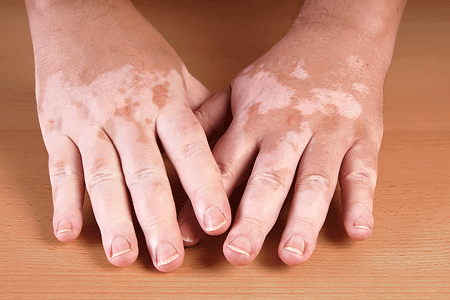
Patchy loss of skin color often indicates that targeted therapy is working.
This patchy loss of skin color often means that you’re responding well to treatment. While a good sign, many people want to know what can bring back their skin color.
At present, there isn’t effective treatment for this side effect. However, studies are being run to find ways to restore color loss if it occurs. Results from clinical trials are encouraging. However, more studies are needed to know if the treatment can restore lost skin color without jeopardizing cancer treatment.
For immediate relief:
- Avoid injuring or irritating your skin.
- Wear sunscreen that offers broad-spectrum protection, SPF 30 or higher, and water resistance. Reapply it every 2 hours when outdoors. This can prevent a painful sunburn on lighter skin.
- If you wish to cover up the light patches, use camouflage makeup to even out your skin tone.
When to contact your dermatologist or oncologist: Immediately.
Skin cancer and precancerous skin growths
Targeted therapy can effectively treat skin cancer. The changes that targeted therapy produces in the skin also make it possible for patients to develop:- Skin cancer
- Precancerous growths (actinic keratoses)
- New and changing moles, which can turn into melanoma, the most serious skin cancer
If anything on your skin is growing, bleeding, or changing, contact your dermatologist or oncologist right away.
What you can do: To reduce your skin cancer risk and catch skin cancer early, dermatologists recommend the following:
- Protect your skin from the sun
- Perform skin self-exams
- See your dermatologist for skin exams, as often as recommended.
- If you don’t have a dermatologist, use Find a Dermatologist to locate a doctor and see them for skin exams.
When to contact your dermatologist or oncologist? Immediately.
Caught early, skin cancer, including melanoma, is highly treatable. It’s also important to treat precancerous growths, which are called actinic keratoses. Left untreated, some precancerous growths turn into skin cancer.
Hair changes
Targeted therapy can affect the hair in different ways. Some patients develop one or more of the following, usually within 1 to 3 months of starting targeted therapy:- Hair loss
- Hair growth slows
- Hair becomes thinner, brittle, or curly
- More facial hair
- Eyelashes grow longer
- Eyebrows thicken
- Loss of hair color
None of these side effects are dangerous, so you can continue targeted therapy treatment uninterrupted. If a change bothers you, here’s what dermatologists recommend:
For hair loss due to targeted therapy. To treat it, you can:
- Safely use 5% minoxidil, which is shown to grow hair. To be effective, you must apply minoxidil daily.
- Ask your dermatologist about other treatment options.
For other hair changes. Be sure to do the following:
- Speak with your dermatologist before you try at-home care or visit a salon. Waxing, epilating, coloring your hair, and other fixes can be too irritating. Targeted therapy makes your skin and scalp extremely sensitive.
- Tell your oncologist or dermatologist if your eyelashes are growing or your eyes feel irritated. Sometimes, eyelashes need trimming.
Nail changes
If your medication affects your nails, changes you may develop include:- Skin around your nails becomes very dry, cracks, or peels away
- Swollen cuticles
- Brittle nails
- Brown or black streak, band, or spot develops on a fingernail or toenail
- White spots, lines, or patches appear
- Skin around a nail turns color, leaks pus, and is painful
- Deep, horizontal grooves or ridges
- Nail starts to detach, and will eventually fall off
For immediate relief. To reduce irritation:
- Use a gentle cleanser with a pH around 5 to wash your hands and bathe. You can find this product online by searching for “gentle cleanser with pH around 5.” If you have trouble finding a cleanser, ask your dermatologist to recommend a product.
- Avoid sunlight, heat, and humidity.
- Apply opaque nail lacquer to hide nail imperfections, such as ridges, and protect nails from the sun.
When to contact your dermatologist or oncologist: Immediately.
Some of these changes, such as an infection, require treatment. If a brown or black color appears, it needs to be examined to rule out skin cancer.

How to care for your skin, hair, and nails while receiving targeted therapy
While you’re receiving targeted therapy, your skin, hair, and nails can be extremely sensitive. This dermatologist-designed care plan can reduce possible side effects and help you feel more comfortable:
Practice gentle skin care. Here’s what dermatologists recommend:
- Wash your skin with a mild cleanser. A mild cleanser is non-abrasive, fragrance free, has a pH of about 5, and doesn’t contain alcohol. You can often find this product by searching online for “gentle cleanser with pH around 5.” If you have trouble finding this product, ask your dermatologist for a recommendation.
- Wash with care. Wet your skin with warm water and use your fingertips to apply cleanser. Using a washcloth, mesh sponge, or anything other than your fingertips can irritate your skin.
- Rinse off the cleanser with warm water, using only your hands.
- Gently pat your skin dry with a soft, clean towel.
- Apply moisturizer after washing and throughout the day. Petroleum jelly is an effective moisturizer. If you prefer, you can use thick, creamy moisturizer. Choose one that’s fragrance free and formulated for sensitive skin.
- Avoid harsh skin care products, such as acne or antiaging treatments, and anything that contains fragrance. Even if you develop a rash that looks like an acne breakout, it’s essential to not use any acne treatment. Acne products are too harsh for your sensitive skin.
Be gentle with hair. Gentle hair care can help your scalp feel better and reduce possible side effects. To be gentle with your hair and scalp:
- Wash your hair with a gentle, moisturizing shampoo. Avoid shampoos that contain fragrance, sodium lauryl sulfate, or sodium laureth. These ingredients can be irritating.
- Apply a gentle, moisturizing conditioner after shampooing. Use a conditioner that you rinse out. It should be free of fragrance, sulfates, and parabens.
- Use a moisturizing hair cream. This product can nourish and soften hair, preventing dry, brittle hair. If you have trouble finding this product, ask your dermatologist.
- Gently brush and comb your hair. Don’t yank on it, even if you want to remove a tangle.
- Protect your hair from heat. Limit your use of blow dryers, curling irons, and flat irons.
- Choose a hairstyle that doesn’t pull on your hair. Anything that pulls on your hair can damage your hair, leading to hair thinning or hair loss. Skip wearing a tight ponytail, bun, or cornrows. If you wear a weave or extensions, make sure all are lightweight, so they do not pull.
- Avoid coloring, perming, or relaxing your hair. These can damage your hair and irritate your sensitive scalp.
Protect your skin from the sun. Several targeted therapy medications make your skin more sensitive to the sun. Sun protection is important for people of all skin tones. Here’s how dermatologists recommend you protect your skin while receiving targeted therapy:
- Seek shade. Stay in the shade as much as possible.
- Wear sun-protective clothing. This includes a wide-brimmed hat, sunglasses, long sleeves, and pants. Some patients prefer to buy clothing with a UPF label, which tells them how well the clothing protects skin from the sun. Dermatologists recommend clothing that offers UPF 30 or higher.
- Apply sunscreen to all skin that clothing doesn’t cover. Use sunscreen that offers broad-spectrum protection, SPF 30 or higher, and water resistance. Reapply it every two hours and after sweating or swimming.
- When taking the targeted therapy vermurafenib (brand name Zelboraf), use UV-light blocking window films. Even sun coming in a window can cause a problem, so you’ll want to apply films to your car windows. If you spend time near any windows at home, apply films to these windows, too.
If you choose to wear makeup, use makeup that won’t irritate your skin. Look for makeup that is:
- Formulated for sensitive skin
- Fragrance free
- Moisturizing
- Lightweight (avoid heavy formulas)
- Non-comedogenic (won’t clog pores)
- Allergy tested (hypoallergenic)
- Has SPF 30 or higher
While on targeted therapy, your dermatologist can play an essential role on your care team. If you develop a reaction, your dermatologist can tell you what’s happening, treat the reaction early, and provide you with individualized skin, hair, and nail care.
To find a dermatologist near you, go to Find A Dermatologist.
Related AAD resources
Skin cancer: Learn about symptoms, how skin cancer is diagnosed, and the causes.
Dermatologist reviewer bios
Natalie H. Matthews, MD, MPhil, FAAD
Dr. Matthews is a board-certified dermatologist and Fellow of the American Academy of Dermatology (FAAD). She sees patients at Henry Ford Health in Michigan and is a Clinical Assistant Professor of Dermatology at Michigan State University.
Her areas of expertise include:
Skin cancer
Melanoma
Skin cancer surgery
Moles and other non-cancerous growths
In addition to seeing patients and teaching, Dr. Matthews is Co-director of the Henry Ford Pigmented Lesions Clinic and Co-director of the Henry Ford Cancer Center Melanoma Tumor Board.
Her research interests include:
Melanoma
Skin cancer prevention
Patient education
Rajiv I. Nijhawan, MD, FACMS, FAAD
Dr. Nijhawan is a board-certified dermatologist and board-certified Mohs surgeon. He is a Fellow of the American Academy of Dermatology (FAAD) and the American College of Mohs Surgery (FACMS).
His areas of expertise include:
Mohs surgery
Reconstructive surgery
Surgical treatment for all types of skin cancer
In addition to performing surgery, he is an Associate Professor of Dermatology at the University of Texas Southwestern (UTSW) Medical Center, Director of the Parkland Memorial Hospital Skin Tumor Clinic, and Director (and founder) of the UTSW High Risk Skin Cancer Transplant Clinic. The latter serves people who have received an organ transplant, as anyone living with a transplanted organ has a greatly increased risk of developing skin cancer.
His research interests include:
Skin cancer
Mohs surgery
Patient safety
Darrell S. Rigel, MD, MS, FAAD
Dr. Rigel is a board-certified dermatologist and fellow of the American Academy of Dermatology (FAAD). With over 40 years of experience in the field, Dr. Rigel is well known for his expertise, especially in the areas of:
Melanoma
Early detection of skin cancer
Skin cancer treatment
Passionate about education, Dr. Rigel has trained many dermatologists. He is currently Clinical Professor of Dermatology at the NYU School of Medicine and Adjunct Clinical Professor of Dermatology at UT Southwestern Medical School.
Dr. Rigel is well known for his research and patient care. He co-authored numerous articles that appear in leading medical publications. He co-created the ABCDEs of Melanoma. This easy-to-remember message has helped countless people find this skin cancer early when it’s highly treatable. Today, the ABCDEs of Melanoma are widely used around the world by professional organizations.
Written by Paula Ludmann, MS
Paula has more than 20 years of experience writing about skin, hair, and nail conditions for patients and the public.
She enjoys developing easy-to-understand information that people can use to make informed health decisions.
Paula’s passion for creating patient-first information has led to her work being mentioned by Prevention magazine and the Washington Post. She has won numerous awards, including Webbies, Apex Awards, and several awards from professional organizations.
References
Collins LK, Chapman MS, et al. “Cutaneous adverse effects of the immune checkpoint inhibitors.” Curr Probl Cancer. 2017 Mar-Apr;41(2):125-8.
Lacouture ME. “Management of dermatologic toxicities associated with targeted therapy.” J Adv Pract Oncol. 2016 Apr;7(3):331-4.
Ladwa R, Fogarty G, et al. “Management of skin toxicities in cancer treatment: An Australian/New Zealand Perspective.” Cancers (Basel). 2024 Jul 12;16(14):2526.
Macdonald JB, Macdonald B, et al. “Cutaneous adverse effects of targeted therapies: Part I: Inhibitors of the cellular membrane. J Am Acad Dermatol. 2015;72(2):203-18.
Macdonald JB, Macdonald B, et al. “Cutaneous adverse effects of targeted therapies: Part II: Inhibitors of intracellular molecular signaling pathways.” J Am Acad Dermatol. 2015 Feb;72(2):221-36.
Patterson S, “Cutaneous reactions to targeted therapy.” Presented during focus session: Update on cutaneous reactions to targeted and immune cancer therapies. 2017 Annual Meeting of the American Academy of Dermatology; 2017 March 3-7. Orlando, FL.
Sibaud, V, Meyer N. et al. “Dermatologic complications of anti-PD-1/PD-L1 immune checkpoint antibodies.” Curr Opin Oncol. 2016;28(4):254-63.
Vendrely V, Mayor-Ibarguren A, et al. “An emollient PLUS balm Is useful for the management of xerosis in patients treated for cancer: A real-world, prospective, observational, multicenter study.” Dermatol Ther (Heidelb). 2022 Mar;12(3):683-99.
Wang Z, Wang M, et al. “Targeted therapies induced depigmentation: A review.” Front Immunol. 2025 Aug 8;16:1625738.
Image credit
Getty Images